“To Kill a Mockingbird” by Harper Lee, “Lord of the Flies” by William Golding and “The Great Gatsby,” by F. Scott Fitzgerald are books synonymous with greatness, attested to by their status as classic novels…and classic banned books.
For decades, these literary masterpieces have been taken off high school shelves for topics such as racism, violence and sexual content. They were then unbanned and placed back into libraries until people found another reason to ban them, and the cycle continues. In modern times, these novels are now left on the shelf permanently, but there are hundreds of newer books with newer issues that create the controversy of whether a book should be banned. No matter the issue within the pages, all books should be allowed in libraries unless they are truly inappropriate.
The reason to ban books hails from the idea that some literature may not be suitable for students due to profanity, cultural or social issues, or gender related topics featuring LGBTQIA+ themes. Moreover, many books are banned for sexually explicit themes, but only one to two pages actually show that. In truth, thousands of books are being banned for controversial topics rather than dangerous ones.
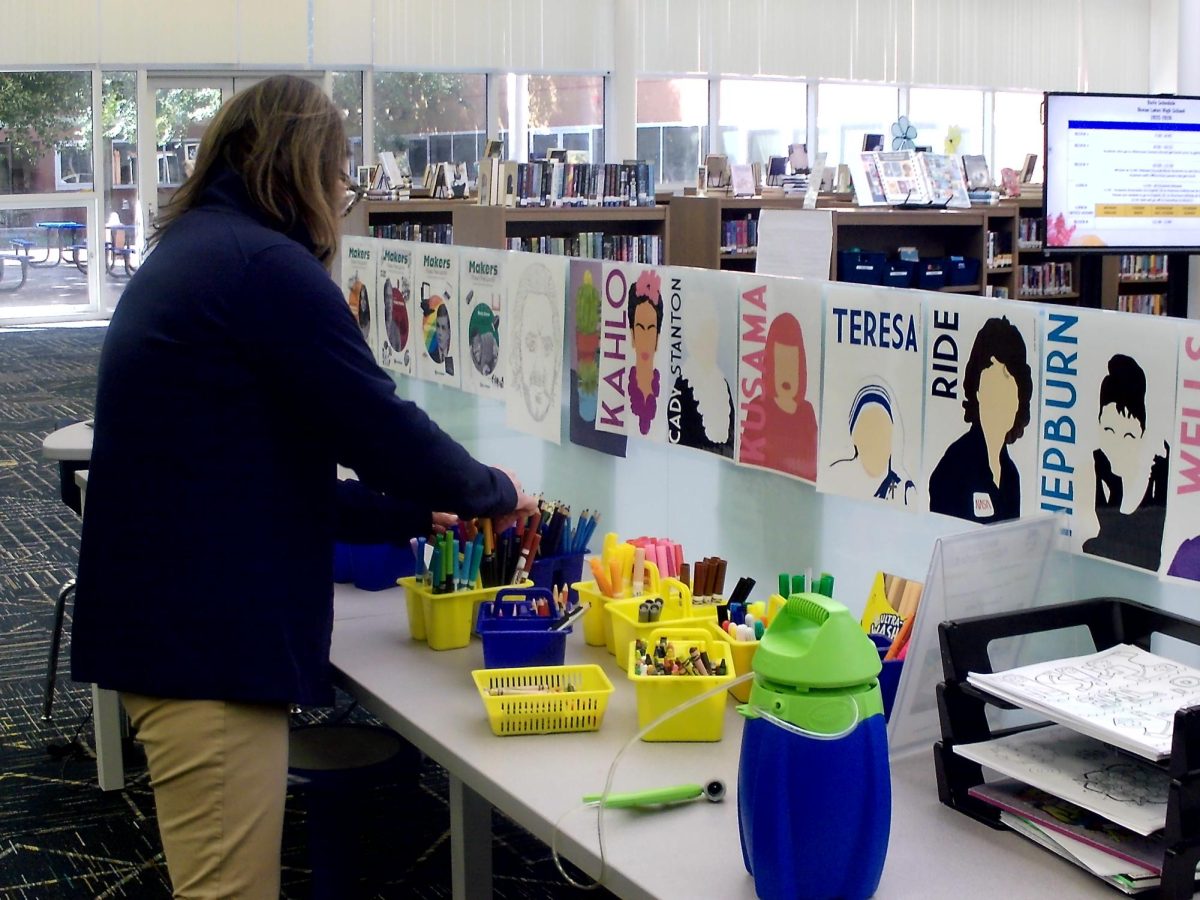
“I think the people should have the choice and the right to choose what they want to read,” library media specialist Beth Labiak said. “I do understand the need to be aware and have appropriate books for students, but once you get into high school, students that are becoming young adults should be able to access what they want to read.”
In the 2024-2025 school year, 6,870 banned books were documented in the United States by PEN America, a non-profit organization that supports free expression in writing and literature.
School systems today base banned books on the level of the reader, yet multiple books on the high school ban list are appropriate for students.
The book with the most bans in libraries in 2025 is “A Clockwork Orange” by Anthony Burgess for its violence and language, but many scholars argue that the dystopia exposes the reader to a cautionary tale with complex moral questions. The current reasons to ban a book are vague and abuse social issues as an excuse to leave them out of the library.
“I’m opposed to almost all of the books that have been banned in history because I think that reading should be a freedom that everyone should be able to utilize,” Honors and MSA English 10 teacher Don Kroeller Jr said. “Any high school student should be able to read any high school book they want.”
Elementary and middle schools completely ban any books with offensive language or sexual themes as an ethical protection, but high schoolers are young adults who are often exposed to these themes anyways. Students should have the right to read what they please in the library regardless of LGBTQIA+ themes or strong wording.
“I think that people deserve access to books,” library media staff member Emily Kilmartin said. “They take us out of our normal world and give us a perspective that we might not otherwise have.”
Literature is a vital part of high school education, and when people ban books based on violence or social conflict, they censor students from what they may want or even need to read. In time, if people see how banning books negatively affects high school students everywhere, this injustice can be stopped.