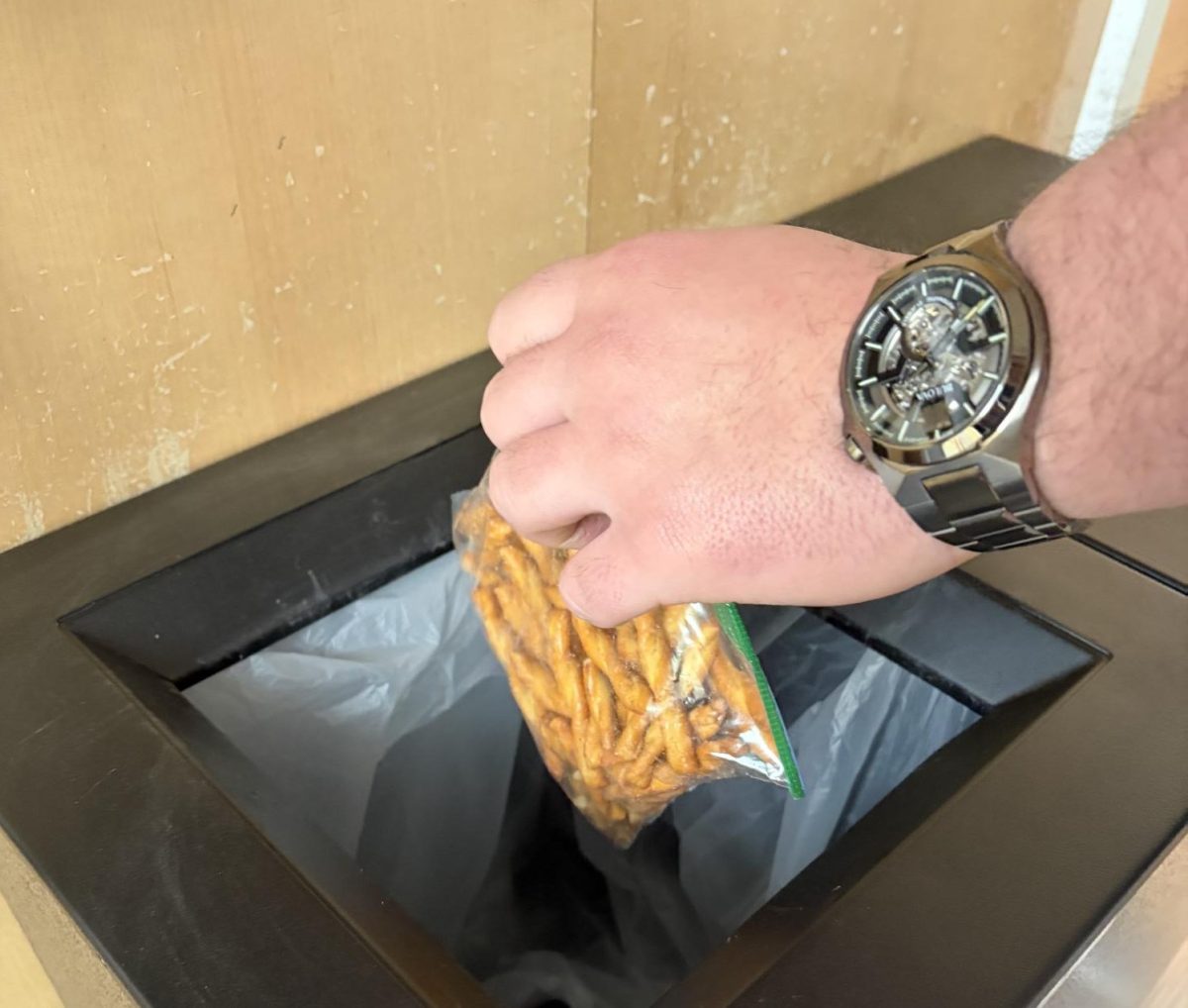
Every day, millions of plates are piled high with scrumptious, good eats–pasta, burgers, fruits galore–just waiting to be devoured; yet, most of these meals sit for hours on the plate only to be thrown into the depths of garbage bins. One of the biggest contributors to this? Schools.
Nationally, schools produce on average approximately 530,000 tons of food waste per year, according to a study by World Wildlife. This is equivalent to the weight of about over five fully loaded U.S Navy aircraft carriers.
The length of lunch periods are one direct cause of food waste in schools. On average, students have around 30 minutes to eat lunch each day; however, this does not account for the extra time spent waiting in a lunch line. In fact, a study at San Diego State University found that schools with longer lunch periods had a 13% decrease in waste because when students have longer to eat, they have more time to consume their food.
Additionally, the same study revealed that some students feel pressured to add unwanted food to their plate when in the lunch line because they think they have to take it. This pressure results in a large portion of the food being thrown away that was never intended to be consumed when it was put on the plate.
While food waste isn’t an issue that can be fixed overnight, there are numerous feasible solutions to get the process started.
For example, share tables are a great way to reduce waste while also providing food to others in need. A share table is a location in the school or cafeteria where students may place unwanted and unopened lunch items for others to take for free. These items can even be donated to local food banks and homeless shelters, providing an easy avenue to helping those in need without wasting perfectly good food.
Furthermore, some schools have built in composting to their daily lunch time routine. Locally, Arrowhead Elementary in Virginia Beach recently installed a composting system in their school courtyard. Students take turns accounting for compostable items and placing them into the school’s compost bin which provides fermentation for their garden. This not only decreases methane emissions, but also creates a sustainable and fresh gardening system that promotes environmental education and awareness in the community.
As the world continues to develop and resources become limited, wasting food is not an option. Schools need to do their part in ensuring that unwanted food is not just thrown away to promote long term sustainability and stability.