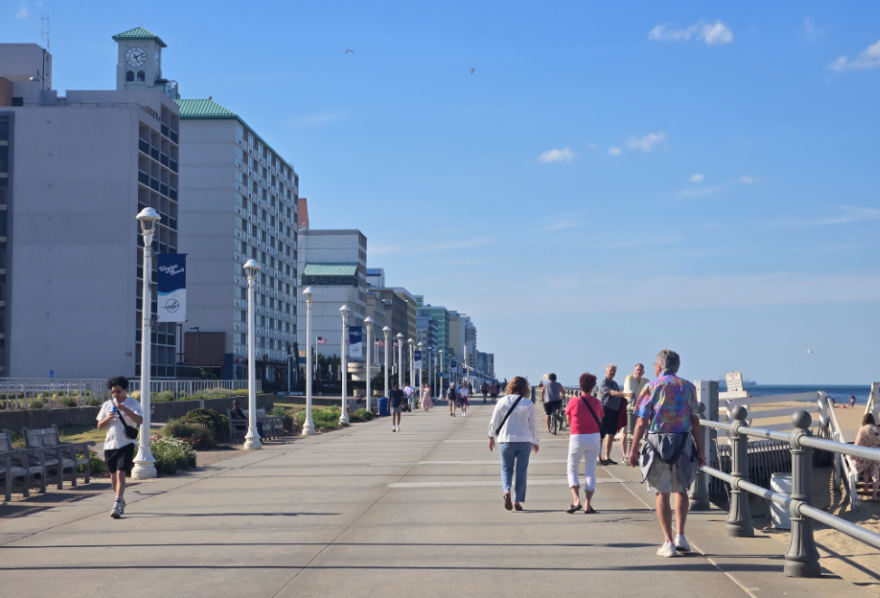
Imagine walking along the beach on a warm, sunny day. The smell of the salty air, the wind flowing in one’s hair, the crystal blue water sparkling in the sun. Suddenly, small, silvery fish fill the shoreline like sand. Piles on piles of dead fish leave a lingering stench in the air. What started as a leisurely walk turned into a massacre.
Around March 7, thousands of menhaden fish washed up on nearby Virginia Beach shorelines. The cause was identified as a cold shock, a phenomenon that occurs when the water and air temperatures vary drastically, causing the species bodies to experience shock when going from high to low or low to high temperatures.
Menhaden, brevoortia tyrannus, are small fish that are vital to the health of the Chesapeake Bay and connecting watersheds; however, these fish have become a massive target for a nutritional company, known as Omega Protein, that contributes to large scale reduction of the species.
They may be small, but menhaden are keystone species in the Chesapeake Bay, and without them, the surrounding ecosystem fails. These fish are one of the main food sources for striped bass, bluefish, osprey, whales and numerous other species, according to the Chesapeake Bay Foundation (CBF). Furthermore, these silvery fish are highly efficient filter feeders that contribute to the clarity and turbidity of the bay and nearby rivers, preventing an excess of pollutants in waterways.
Reduction fisheries, such as Omega protein, consistently overharvest and deplete the menhaden population in the bay. In fact, for years Omega’s lobby team has blocked the needed funding for scientific studies of menhaden, and the reduction industry has exceeded the catch limits in the bay.
During the 2026 Virginia General Assembly session, CBF advocated for two house bills as well as a budget amendment supporting menhaden in the bay. HB1048 recommended that fisheries pause on menhaden reduction fishing in the Chesapeake Bay until scientific research is developed. HB1049 puts limits on which charges the Virginia Marine Resource Commission to develop a quota period management system for the menhaden reduction fishery which would be designed to ensure the removal of menhaden from the Bay is more evenly distributed throughout the harvest season. Finally, CBF supported a budget amendment which would give $1,000,000 annually to funding for menhaden research. However, both house bills failed the session, but the budget amendment successfully passed.
Menhaden contribute to Virginia Beach’s tourism economy, recreational fishing, and job market, making their presence incredibly crucial for not just the bay, but for communities that depend on it; however, there is a lack of education on this issue, making it difficult to obtain political action. Citizens can do their part in standing up for this species by lobbying to state legislators, spreading awareness to others on the issue, and supporting local organizations who work to preserve this species. Without action, there is no change, and change can start with any one person.